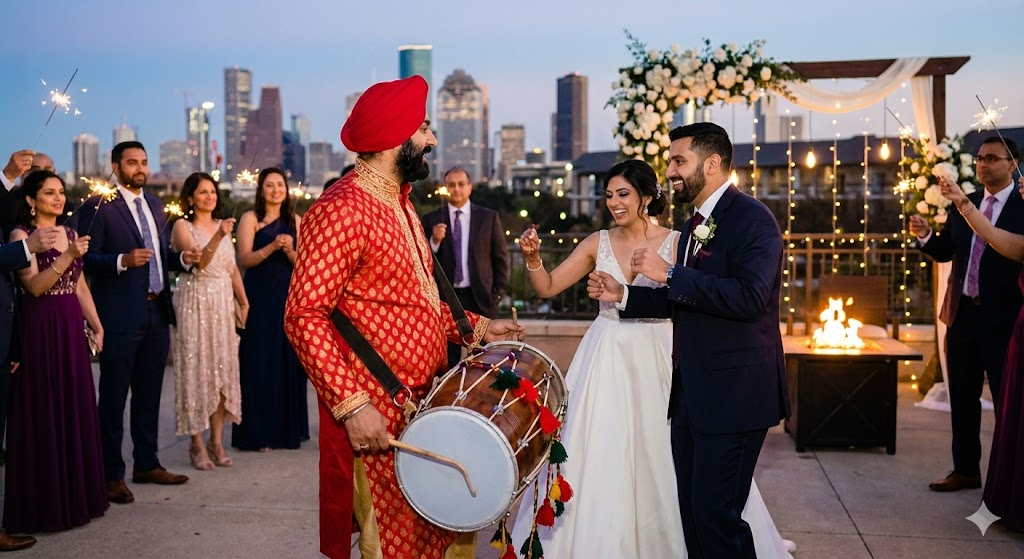
In South Asian weddings, the Dhol isn’t background sound—it’s the heartbeat of the celebration. The moment it starts, the entire mood shifts.
Why Dhol Holds Cultural Weight
The dhol has deep roots in Punjab, where it has traditionally been used in:
- Harvest festivals
- Community gatherings
- Wedding processions
It represents:
- Joy
- Celebration
- Unity
This is why its presence at weddings feels natural, not optional.
Emotional Trigger (This Is What People Feel)
You don’t “listen” to dhol—you react to it.
- Guests start clapping without thinking
- Elders smile, even if they don’t dance
- The groom’s energy spikes instantly
That’s not coincidence—it’s rhythm psychology.
Modern Weddings vs Traditional Feel
Even in luxury weddings with DJs and LED stages, dhol remains irreplaceable.
Why?
Because:
- DJs play tracks
- Dhol creates moments
Real Insight
If your wedding has everything but no dhol, it will look complete—but feel empty.