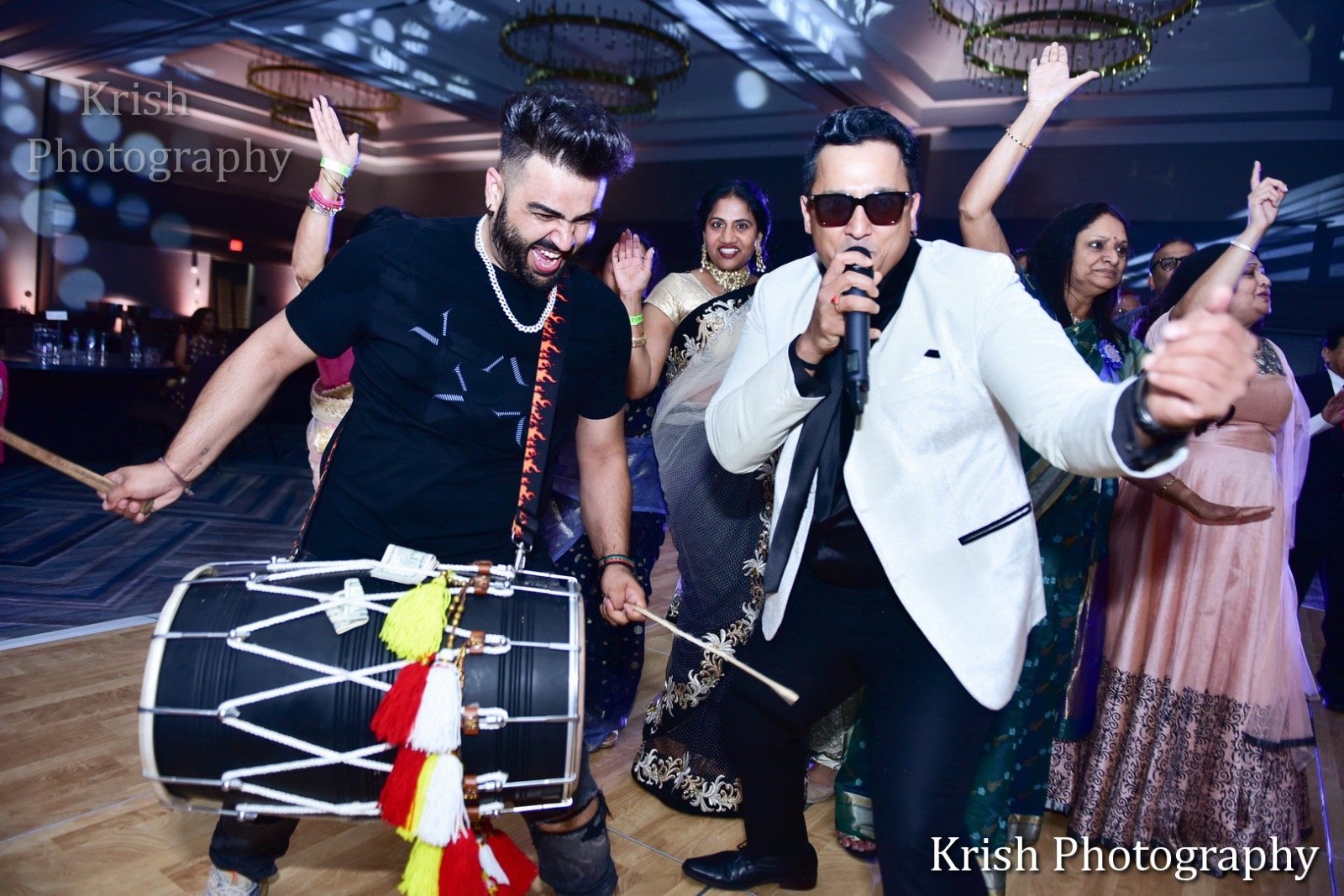
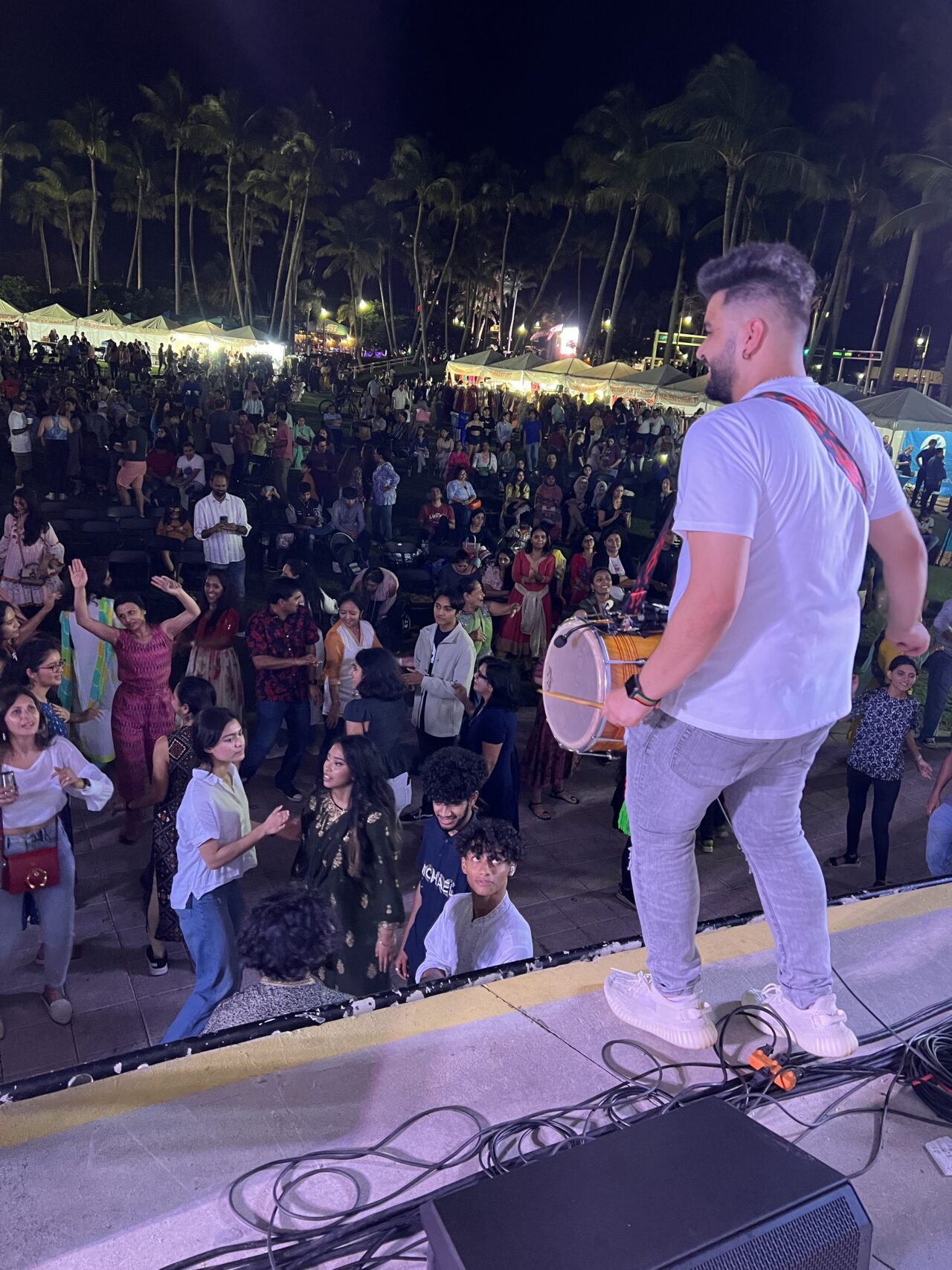
A Gujarati wedding is a series of celebrations, and music runs through most of them. Garba and raas bring families into the dance. The dhol sets the pace and marks the big moments. If you are planning a Gujarati wedding in the USA, this guide explains where garba, raas, and Gujarati wedding dhol usually fit and how to plan live music for each event.
Why Music Matters So Much at a Gujarati Wedding
Gujarati weddings are social. Many guests expect to dance, and dancing at these events often means a group dance, not a solo floor. Garba and raas are built for exactly that: circles and rows where everyone moves together. A dhol makes group dancing easier because the beat is clear, loud, and easy to follow.
Wedding customs vary by family, community, and region, so treat this guide as a general outline and confirm the schedule with your family and planner.
The Events Where Dhol Usually Appears
Families structure the celebrations differently, but these events commonly involve music and sometimes a dhol:
- Pre-wedding events: Mehndi and pithi (the turmeric ceremony) are often lively family events where a dhol can set the mood.
- Garba or raas night: A dedicated dance evening, often before the wedding day, where garba and dandiya raas are the main event.
- Sangeet: Performances, family dances, and open dancing. A live dhol can take the last part of the night up a level, and our post on what makes a top dhol player stand out at sangeet and reception nights explains how.
- Groom’s procession: The varghodo, often called the baraat, is the groom’s procession to the venue, and the dhol is typically what leads it.
- Reception: Many receptions have a dance floor, and a live dhol can open or close the night.
Garba and Raas at the Wedding
Garba is the circle dance. Raas, often called dandiya raas, is the stick dance. At weddings, they are often danced together on the same night. The dhol’s job is to keep the tempo steady and build energy as songs move from slow to fast. We cover this in detail in our guide to dhol beats for garba.
If you plan to have both a DJ and a live dhol, share the playlist order with your dhol player so the beat lines up with the songs and the handoffs feel natural.
A Kutchi Touch
Kutch is a region of Gujarat, and Kutchi families sometimes have their own music and traditions. Zubair Firoz comes from a Kutch, Gujarat cultural background and has been playing for 25 years. If your family has particular songs or rhythms in mind, tell him in advance so he can prepare.
Planning Live Dhol for a Gujarati Wedding
Use this checklist:
- List your events. Decide which of the celebrations you want live dhol for. You do not need it for all of them.
- Share the schedule. Give start times, run times, and any fixed moments like the groom’s entrance.
- Check the venue. Ask about noise limits, indoor and outdoor areas, and where a procession can walk.
- Confirm the sound. Ask what the dhol player brings and what the venue provides.
- Talk about music. Share the songs, languages, and styles your families expect.
- Plan travel. Kutchi Dholi is Houston-based and available nationwide, which matters for destination and out-of-state weddings. See our post on traveling for a wedding out of state.
What Zubair Plays
Beyond the dhol, Zubair plays roto drums, cajon, flute, darbuka, timbales, zen drum, rabab, djembe, congos, matki, sitar, electric pads, bongos, and tabla. He enjoys mixing percussion with a DJ or live band, which is useful if your wedding blends traditional music with Bollywood or party sets.
Book a Dhol Player for Your Gujarati Wedding
- Email: kutchidholi@gmail.com
- Phone: +1 832-727-6349
Send your event dates, city, and a rough schedule, and ask which events make the most sense for live dhol.
Leave a Reply