Ask anyone who has stood in a garba circle at midnight what makes the night work, and many will say the same thing: the beat never lets go. Dancers can change steps, singers can change songs, but the dhol is what keeps hundreds of people moving in one direction at the same pace. This post explains how dhol beats for garba are built, how they change through the night, and what to look for when you are choosing a dhol player for your Navratri or garba event.
Why the Dhol Sits at the Center of Garba
Garba is a circular dance from Gujarat, traditionally danced around a lit lamp or an image of the Goddess during Navratri. The dhol, a double-headed barrel drum, is one of the main instruments that carries it. Because it is loud, low, and physical, it works as both the heartbeat and the signal: dancers hear it first, and everything else follows.
A good dhol part does three jobs at once. It holds the tempo steady so the circle does not drift. It tells dancers when to clap or turn. And it marks the moments where the song speeds up, slows down, or ends.
The Tempo Arc of a Garba Night
Most garba nights are not played at one speed. They build. A common shape, described here in general terms, looks like this:
- A slow, devotional opening. The music starts gentle and the dhol stays restrained, often supporting a prayer or aarti-style song.
- A medium groove. Dancers settle into the circle and the dhol locks into a steady, easy pattern that is simple to follow.
- A faster build. The tempo rises, the circle tightens, and the dhol adds energy through accents and fills.
- A fast peak. Late in a song, the beat can run quickly and the whole circle spins together before dropping back down.
This arc is why the same song can feel very different at 9 p.m. and at 11 p.m. A dhol player who understands the arc knows when to hold back so there is room to build.
Clap Patterns and Garba Styles
Garba is often described by the clap pattern. Two common ones are the two-clap style and the three-clap style, and many dancers know them by their Gujarati names. The dhol part changes with the style because dancers need the beat to land where their hands meet.
Dandiya raas, the stick dance that often shares the same evening, calls for a different feel. Dancers strike sticks together, so the beat has to be clear and punchy enough to cut through the sound of the sticks. The exact rhythm names and counts vary by region and by performer, so if you want a specific pattern for a specific song, tell your dhol player in advance and ask what they recommend.
Reading the Circle
The part audiences rarely notice is how much a dholi watches. The dhol player is looking at the circle, not just at the singer. If dancers are dragging, the beat can push forward. If they are tired, it can ease. If the floor is full and happy, it can hold a groove and let the energy build.
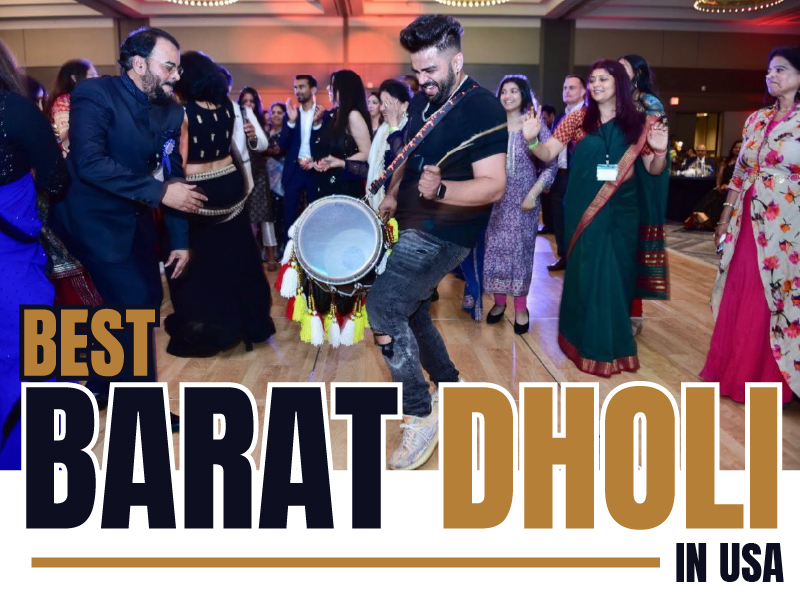
That is also where 25 years on the instrument shows. Kutchi Dholi, Zubair Firoz, has been getting people to dance to dhol beats at garba evenings, weddings, and receptions, and he performs in a Bollywood style that includes dancing with the audience rather than standing behind the drum.
Live Dhol With a Singer or Band
When a garba night has a live singer or band, the dhol has to work with them, not over them. The dhol follows the singer’s phrasing, matches song transitions, and leaves room for other instruments. Zubair plays more than the dhol: his instrument list on kutchidholi.com includes roto drums, cajon, darbuka, timbales, congos, bongos, tabla, flute, and more, so he can add texture beyond a single drum when a set calls for it.
If you are comparing a dhol-led night with a DJ-only night, our guide to what “best dhol player” looks like at a baraat, sangeet, or garba covers how each setting changes the job.
What to Ask a Dhol Player Before Your Garba Night
Use these questions when you are choosing someone for garba:
- Have you played garba before? Garba is not the same as a baraat. The pacing and clap patterns are different.
- How do you handle tempo changes? Ask how they follow the singer or DJ and how they lift a slow circle.
- What is your setup? Ask about the dhol, additional percussion, and what sound equipment you need to provide.
- How long can you play? Garba nights often run long, so confirm set lengths and breaks.
- Can you travel? Kutchi Dholi is Houston-based and available nationwide, so out-of-state events are possible.
Book a Dhol Player for Garba
If you are planning a Navratri or garba event, contact Zubair Firoz directly:
- Email: kutchidholi@gmail.com
- Phone: +1 832-727-6349
Tell him the date, city, venue, and whether you will have a singer, band, or DJ, and he can tell you what setup fits.
Leave a Reply