Dussehra comes at the end of Navratri, and across the United States it is often celebrated as a community event: temple programs, cultural association festivals, outdoor gatherings, and garba nights. If you are organizing one, a dhol player can change how the day feels. This guide covers what a dhol player does at a Dussehra event, how to plan around the practical details, and what to ask before you hire one.
What Dussehra Is, in Brief
Dussehra, also called Vijayadashami, is observed on the tenth day after Navratri begins. It is widely associated with the victory of good over evil, including the story of Rama defeating Ravana and the Goddess Durga’s victory over Mahishasura. Many communities mark it with a Ravan Dahan, the burning of an effigy, along with music, food, and gatherings. In 2026, sources list Dussehra for Tuesday, October 20, but dates and local timings can vary, so confirm with a local panchang or your event organizers.
Where a Dhol Player Fits at Dussehra
Dussehra does not have a single script in the USA. Events differ by city and community. A dhol player is commonly useful in a few places:
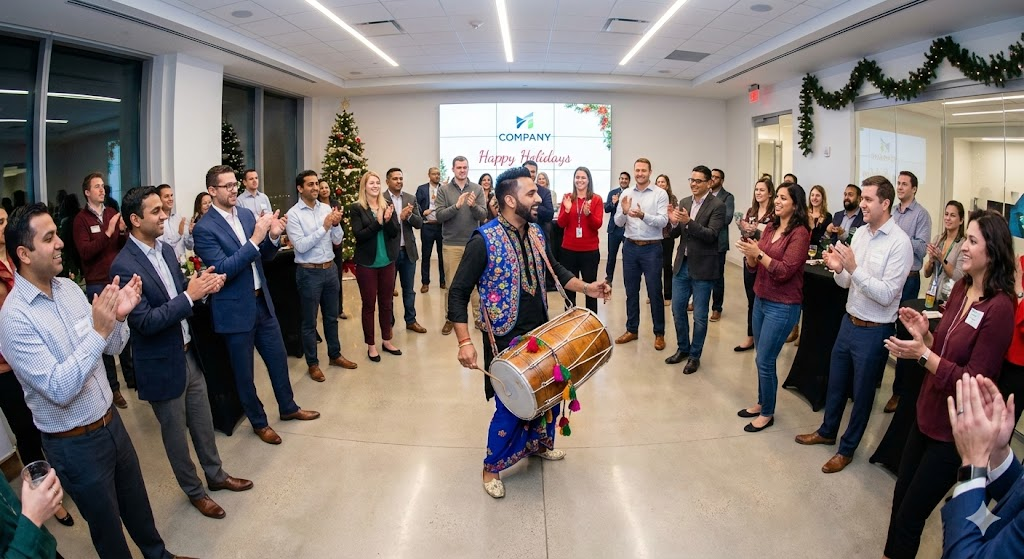
- Procession or entrance: A dhol can lead a walk into the venue or a procession toward the main stage.
- Ravan Dahan build-up: A rising rhythm helps pull a crowd together before the main moment.
- Garba or dandiya finale: Many communities close Navratri with dancing, and a live dhol keeps it moving.
- Cultural stage programs: A solo or duet slot with a singer or dancer adds a live percussion moment.
If you are not sure which of these suits your event, tell your dhol player what the schedule looks like and ask for a recommendation.
Plan the Practical Details Early
Outdoor and community events add details that wedding bookings do not always have. Check these before you commit:
- Sound: Will there be a PA system, or does the dhol player need to bring one? A dhol is loud on its own, but a stage or a large crowd may still need amplification.
- Location: Indoor halls, parks, and parking lots all sound different. Ask your venue about noise limits and any permit rules.
- Weather and power: For outdoor events, ask about cover and power access.
- Movement: If the dhol player needs to walk in a procession, confirm the route and how long it will take.
- Time slot: Confirm start time, length, and breaks so the dhol is not cut off mid-build.
Questions to Ask Before You Hire
- Have you played at community festivals? Ask for examples or videos, which Zubair shares on his YouTube channel.
- Can you perform solo and with a band? Some festivals want a single dhol, others want a full set.
- What instruments do you bring? Zubair’s list includes dhol, roto drums, cajon, darbuka, timbales, congos, and others.
- Do you travel? Kutchi Dholi is Houston-based and available nationwide.
- How far in advance should we book? Festival dates cluster in the same weeks, so ask early.
About Kutchi Dholi
Zubair Firoz, performing as Kutchi Bollywood Dholi, has 25 years of experience playing dhol at receptions, weddings, garba evenings, and other events. He grew up with music from age 4, comes from a Kutch, Gujarat background, and performs in a Bollywood style that involves the audience. He is based in Houston and works across the USA.
Our post on hiring a top dhol player for corporate and cultural festival events goes into more detail on festival bookings in general. This guide focuses on the Dussehra and fall festival season.
Planning a Fall Festival Series
If your community is running Navratri, Dussehra, and other fall events back to back, you can plan percussion across the whole series. Ask whether one performer can cover multiple dates, and share your full calendar so travel and set lengths can be planned in one conversation. For garba nights specifically, see our guide to dhol beats for garba.
Contact for Dussehra and Festival Bookings
- Email: kutchidholi@gmail.com
- Phone: +1 832-727-6349
Send the event date, city, venue, expected crowd size, and the schedule you have in mind.
Leave a Reply