
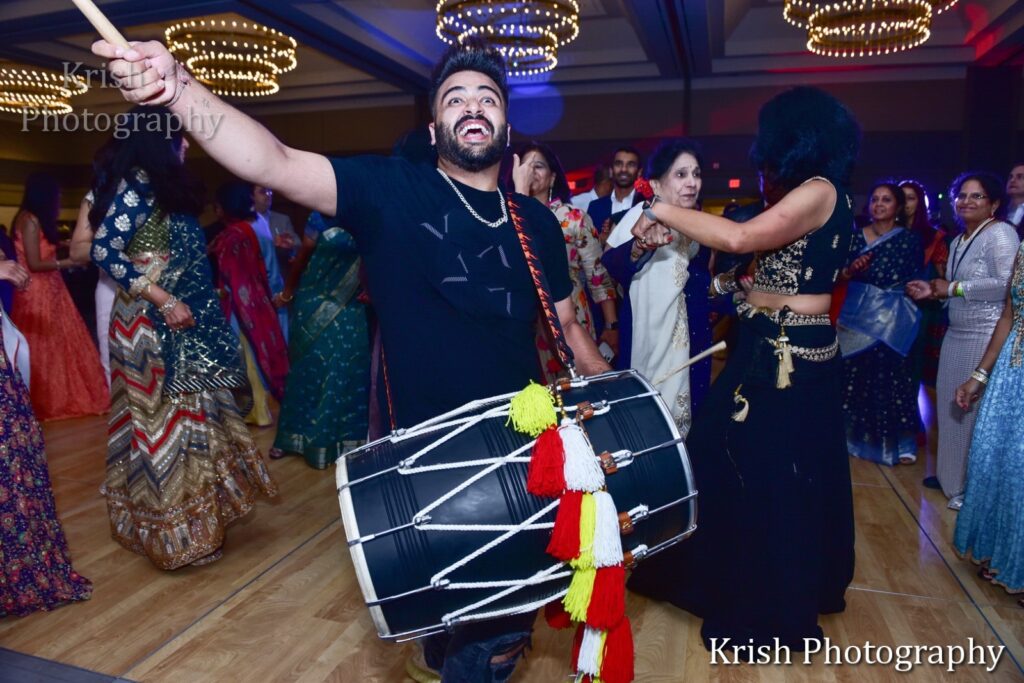
Garba and dandiya raas are the two dances people associate with Navratri, and they often happen in the same venue on the same night. That’s why many guests treat them as one thing. They aren’t. Understanding garba vs dandiya raas helps you dress, dance, and plan music with more confidence, especially if you’re hosting. Here is how the two compare.
The Short Answer
Garba is a circular dance performed with clapping and graceful steps, traditionally around a lamp or an image of the goddess. Dandiya raas is a playful dance performed with a pair of decorated sticks, where partners strike each other’s sticks in rhythm. Both come from Gujarat, and both are tied to Navratri.
Garba Explained
Movement and Mood
Garba is a circle dance. Dancers move around a center point, clapping and stepping in repeated patterns that build in speed. The mood leans devotional because the circle honors the goddess, but it is also social and joyful.
Origins and Recognition
Garba originates in Gujarat, India. UNESCO added Garba of Gujarat to its list of Intangible Cultural Heritage in December 2023, as covered by Indian media at the time. Verify the exact listing details on UNESCO’s site if you plan to cite it.
What Garba Needs
- Open floor space for large circles
- Steady, clear rhythm so the circle can move together
- Music that starts moderate and builds
Dandiya Raas Explained
Movement and Mood
Dandiya raas uses sticks, usually called dandiya. Dancers form lines or circles and strike sticks with partners in a repeating beat. The mood is playful and competitive in a friendly way, and it tends to run faster than the opening rounds of garba.
What Dandiya Raas Needs
- A pair of dandiya sticks for each dancer
- Room to move without hitting others
- A strong, clear beat so the strikes land together
Garba vs. Dandiya Raas: Side by Side
| Garba | Dandiya raas | |
|---|---|---|
| Props | None, just hands and feet | Pair of sticks |
| Formation | Circles | Circles and lines |
| Sound | Clapping, stepping | Clapping plus stick strikes |
| Mood | Devotional and social | Playful and lively |
| Pace | Builds gradually | Often quick from the start |
How They Fit Together at Navratri
Most Navratri programs open with garba and move into dandiya raas as the night goes on. Organizers often alternate the two to give dancers variety and rest. If you’re planning the schedule, think about how much time each style gets and whether you need a break between them.
Music for Each Dance
Rhythm Is the Common Thread
Both dances depend on a beat dancers can hear and trust. Dhol has a long association with garba and raas music, and a live dhol player adds an energy recordings can’t, because the player can react to the crowd.
Matching the Dhol to the Dance
For garba, a steady groove keeps circles together. For dandiya raas, a sharper, more driving pattern helps the sticks land on the beat. A performer who understands both can shift the rhythm as the program moves between them.
What This Means If You’re Hosting
- Tell your guests which style is coming so they can bring or borrow sticks.
- Allow floor space for large circles.
- Talk with your musicians about the order of dances and tempo changes.
- Consider a live dhol to anchor the transitions.
Add Live Dhol to Your Navratri Night
Zubair Firoz, known as Kutchi Bollywood Dholi, was born in Kutch, Gujarat, and brings about 25 years of experience at weddings, receptions, and garba evenings. He is based in Houston and performs across the USA. To ask about live dhol for your garba or dandiya night, contact:
- Email: kutchidholi@gmail.com
- Phone: +1 832-727-6349