
You have decided on live dhol. Now comes a practical question: one player or several? The answer depends on your venue, your crowd and your budget, not on which option sounds more impressive.
This guide compares a dhol group with a solo dhol player so you can choose the right setup the first time.
What Is the Difference Between a Dhol Group and a Solo Dhol Player?
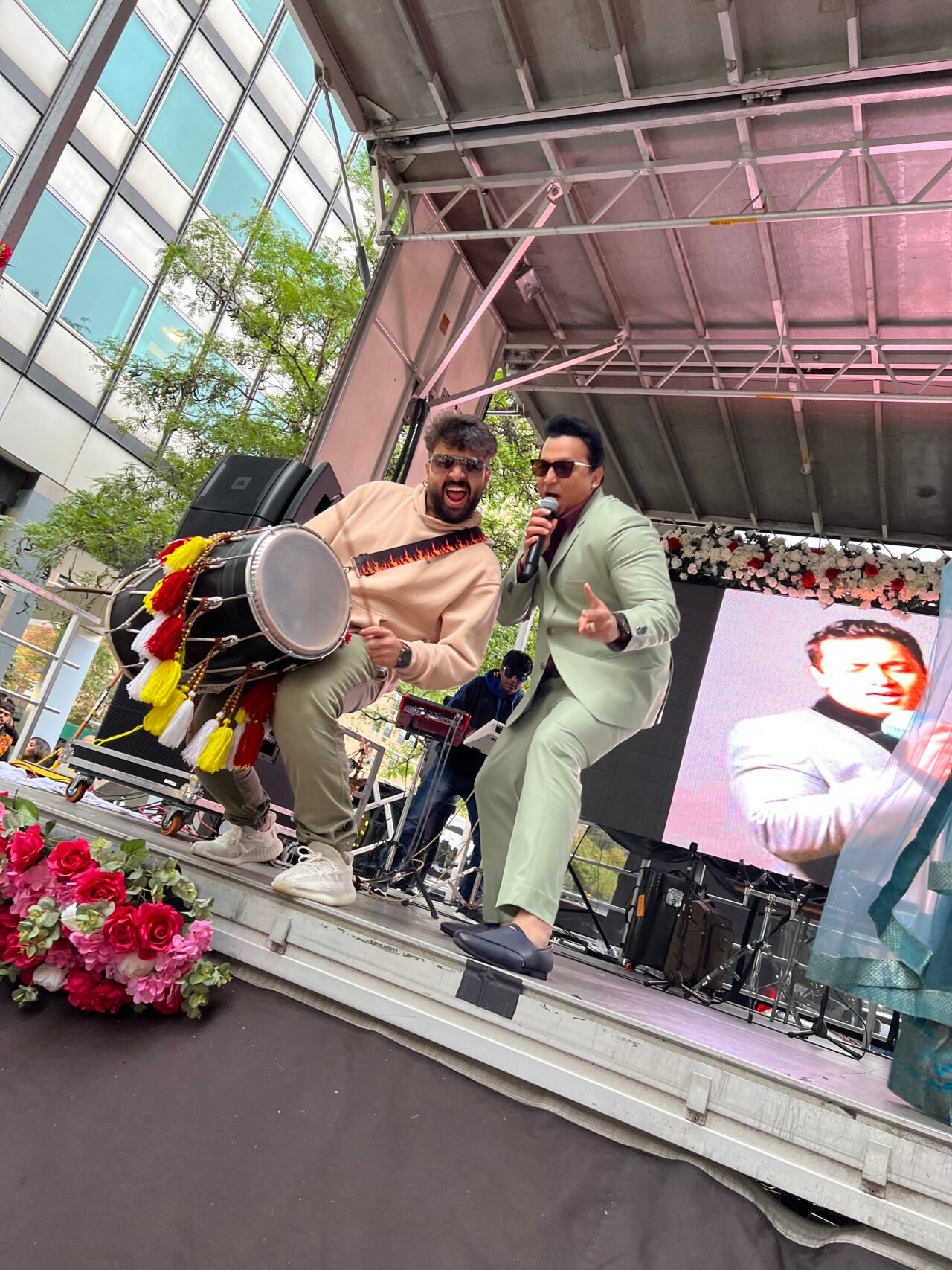
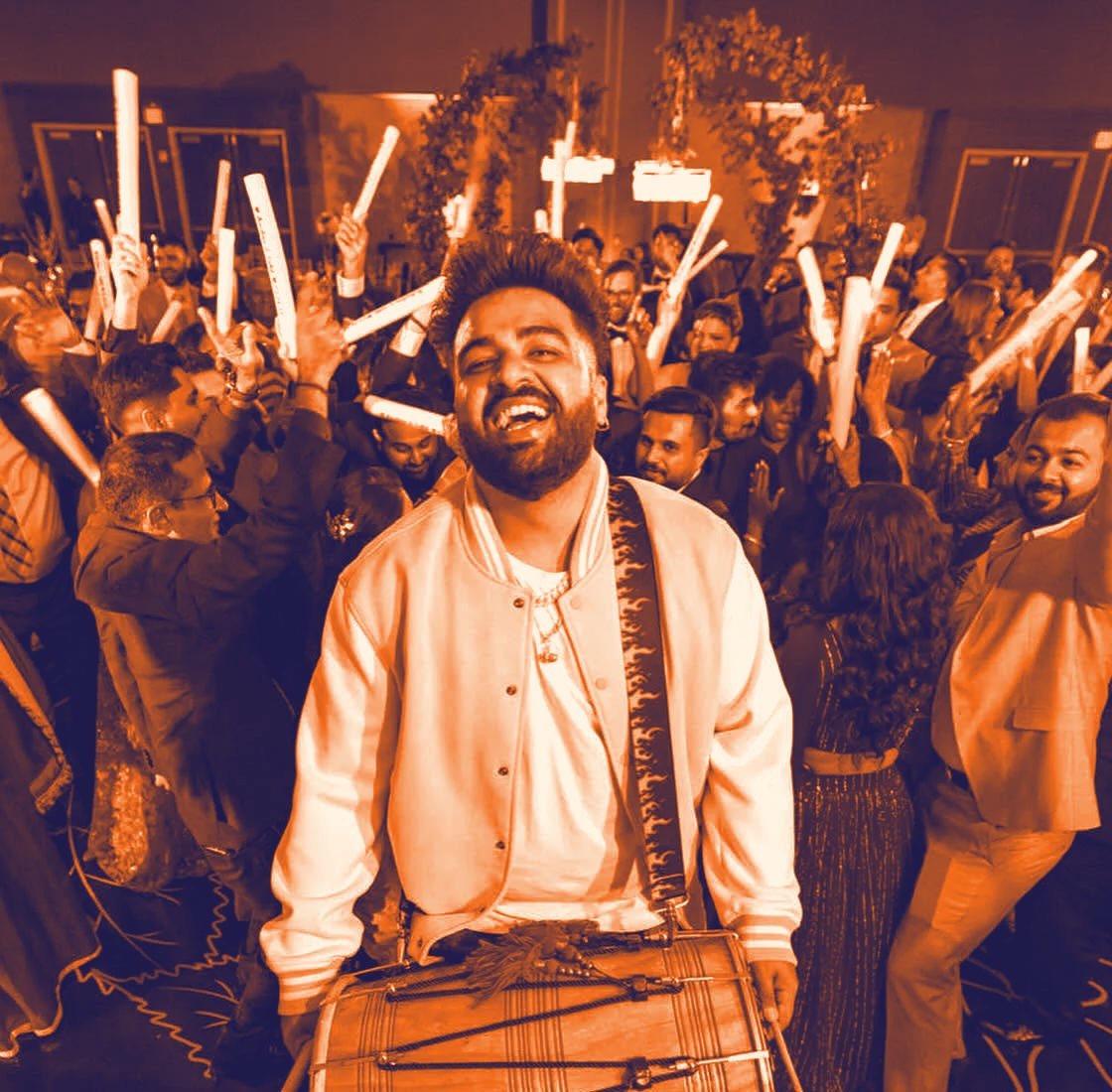
A solo dhol player is one performer. That person drives the rhythm, leads movement and interacts directly with guests.
A dhol group has two or more players, sometimes with extra percussion. The sound is layered and louder, with call-and-response patterns between players.
Both can work well. The sections below show where each fits best.
When a Solo Dhol Player Is the Better Choice
Smaller and Mid-Sized Gatherings
For a birthday, a sangeet, a mehndi or a cocktail party, one skilled player fills the room without drowning out conversation.
Tighter Venues
Banquet halls, backyards and restaurant patios often have limited space. A single performer is easier to place and manage.
Flexible, Interactive Performances
A solo player can read the crowd and change tempo on the spot. Kutchi Bollywood Dholi performs as a multi-instrument percussionist, so a solo booking can include more than the dhol, such as cajon, darbuka, flute or electric pads, depending on what the event needs.
Simpler Planning
One performer means one contact, one arrival time and one set of logistics.
When a Dhol Group May Be Worth It
Large Baraat Processions
A long outdoor procession needs volume and presence. More players cover more distance and keep energy up over a longer walk.
Big Open-Air Spaces
Large outdoor venues absorb sound. Extra players help the rhythm carry.
A Layered, Concert-Style Sound
If you want a show-style moment with interlocking patterns, a group delivers that.
If you think your event needs more than one performer, mention it when you inquire so the setup can be discussed against your venue and guest count.
Dhol Group vs Solo Dhol Player: Side-by-Side
| Factor | Solo dhol player | Dhol group |
|---|---|---|
| Best for | Birthdays, sangeet, mehndi, cocktail parties, corporate events | Large baraats, big outdoor spaces |
| Sound | Focused, adjustable | Layered, louder |
| Space needed | Small | Larger |
| Interaction with guests | Very direct | Shared across players |
| Planning effort | Low | Higher |
| Cost | Generally lower | Generally higher |
How to Decide: Five Quick Questions
- How many guests? Gatherings of roughly a hundred or fewer often suit a solo player, while hundreds in an open space may call for more. Treat this as a rule of thumb.
- Indoors or outdoors? Indoor rooms reward control; large outdoor areas reward volume.
- Procession or stationary performance? Moving crowds need more projection.
- What is your budget? Group bookings usually cost more, so confirm early.
- What mood do you want? A lively, conversation-friendly feel or a full-power moment?
A Middle Path: Solo Dhol Plus Extra Percussion
Many events do not need two dhol players. They need rhythmic variety. A multi-instrument percussionist can move between dhol, cajon, congos or electric pads to change the texture during the night. That gives you some of the range of a group without extra people to coordinate.
Frequently Asked Questions
How many dhol players do I need for a wedding? It depends on guest count, space and whether there is a procession. Share those details when you inquire.
Is a solo dhol player enough for a baraat? For many baraats, yes. Larger or longer processions may benefit from additional players.
Can a solo dhol player work with a DJ? Yes. Live dhol with a DJ is a common pairing for receptions and parties.
Does Kutchi Dholi travel for events? Zubair Firoz is Houston-based with nationwide availability.
Tell Us About Your Event
Send your date, venue, guest count and event type, and we will help you think through the right setup.
Contact: kutchidholi@gmail.com | +1 832-727-6349